Friday, April 18, 2008

Wednesday, April 16, 2008
News from a cold climate
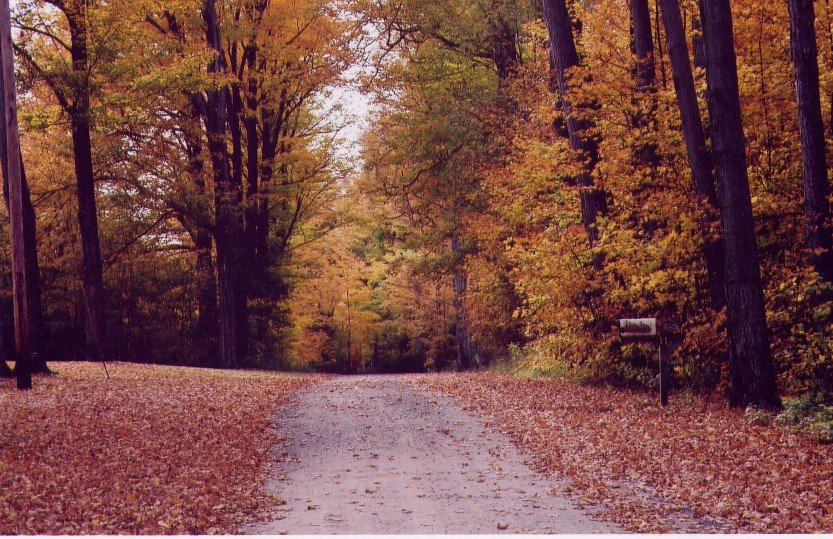
It's been so sudden, this spring; one moment we're hunkering down in the gloom, the snow driving sideways in the teeth of a nor'-easter, settling into drifts three feet high on the back lawn. And now, this? What's going on? This week it's sunshine, blue skies and twenty degrees. Sugaring-off season has come to a screeching halt and the maples that only yesterday looked lifeless have erupted into feathery pink blossoms. The snow piles are shrinking almost with an audible hiss and the cats are giddy with the thrill of stalking everything in sight.
The trees have been spitting small branches all winter, and the lawn's strewn with the wreckage. I gather everything up and have a big burn, before the open-fire ban goes into effect, even cooking supper in the embers: baked potatoes. Rampant efficiency--but I look at the scenery wiggling in the heat and wonder about global warming.
Pretty soon the ground will be hard enough for Dig #4--new weeping tile all round the foundation. "Weeping" is right: I work out what it's going to cost, factor in the landscaping when it's all done and just imagine what I could have spent all that money on.
The trees have been spitting small branches all winter, and the lawn's strewn with the wreckage. I gather everything up and have a big burn, before the open-fire ban goes into effect, even cooking supper in the embers: baked potatoes. Rampant efficiency--but I look at the scenery wiggling in the heat and wonder about global warming.
Pretty soon the ground will be hard enough for Dig #4--new weeping tile all round the foundation. "Weeping" is right: I work out what it's going to cost, factor in the landscaping when it's all done and just imagine what I could have spent all that money on.
Sunday, April 13, 2008
The Alchemists
What is it about a medical degree that qualifies its owner to write/create? Think Sir Arthur Conan Doyle, Jonathan Miller and Somerset Maugham. I've just finished "Travels", non-fiction short essays by Michael Crichton, novelist and another MD. It's autobiographical, flipping between journeys in the inner world and the outer; between forays into the jungle of New Guinea and experiments with astral planes in California. It's a page-turner.
Lest I got carried away with the heady prestige of being a medical student in London, undergrads from other disciplines like chemistry and engineering--from most of the other curricula, in fact--hastened to point out that medics were the low people on the intellectual totem pole. For most of us this was true. For myself it was a miracle: nobody in our family had ever gone in for medicine. I was single-minded, but a one-trick pony. But there were a shining few who were renaissance men, for whom medicine was merely a sideline. Some finished their degree but never went on to practice.
At Christmas the medical students performed skits to amuse the patients ("ward shows"). By far the most fun for the patients was watching the inebriated students (who spent much of the week tormenting their patients with multiple blood tests and endless questions) stumble around making fools of themselves. One group, the Cambridge Footlights, had class: their skits had most of us weeping with uncontrollable laughter. A tall, quiet guy named Graham Chapman figured prominently in this group, which was odd, because most of the time he was pretty gloomy. The "Monty Python" show still carried recognizable snippets from the Cambridge Footlights team.
Another gifted student was Michael Church; raised in Rwanda by missionary parents, he thought of himself as African; he brought African music to West End theatres. His talents also included replicas of the cave paintings at Lascaux, in France, reproduced on large plaster-of-Paris boards.
For a while I practised anesthesiology in Upstate New York. My colleague for many years had been a virtuoso clarinet player from Juilliard who'd played in the Metropolitan Opera and Radio City Music hall. One day he decided to study neurology, and that was it. He earned his way through New York Medical College on scholarships but, finding that neurology didn't put bread on the table, he became an ER doc.
At least one upstate New Yorker owes her life to his diagnostic genius; I remember the night we collaborated in drilling a trephine hole (with a bit-and-brace) to release the expanding blood clot that was crushing her brain (see "What to do Till the Neurosurgeon Arrives by Helicopter"). At about that time Allan became fascinated by anesthesiology and at 53 started a residency, all over again, in Buffalo, graduating (of course) with flying colours. All this while commuting each weekend (five hours one way) and moonlighting in the Emergency Room. He never touched the clarinet again.
Michael Crichton's fiction is darn good; listening to a tape of "Airframe" on a long car trip I was so mesmerized I missed my turn-off ramp. Now there's a man with a busy brain. In idle curiosity I browsed his website, with its list of staggering accomplishments, any one of which would do the rest of us credit. But if contentment is true success, as I believe it is, he's still looking. Being gifted is hard to live with, like being pursued by demons.
Lest I got carried away with the heady prestige of being a medical student in London, undergrads from other disciplines like chemistry and engineering--from most of the other curricula, in fact--hastened to point out that medics were the low people on the intellectual totem pole. For most of us this was true. For myself it was a miracle: nobody in our family had ever gone in for medicine. I was single-minded, but a one-trick pony. But there were a shining few who were renaissance men, for whom medicine was merely a sideline. Some finished their degree but never went on to practice.
At Christmas the medical students performed skits to amuse the patients ("ward shows"). By far the most fun for the patients was watching the inebriated students (who spent much of the week tormenting their patients with multiple blood tests and endless questions) stumble around making fools of themselves. One group, the Cambridge Footlights, had class: their skits had most of us weeping with uncontrollable laughter. A tall, quiet guy named Graham Chapman figured prominently in this group, which was odd, because most of the time he was pretty gloomy. The "Monty Python" show still carried recognizable snippets from the Cambridge Footlights team.
Another gifted student was Michael Church; raised in Rwanda by missionary parents, he thought of himself as African; he brought African music to West End theatres. His talents also included replicas of the cave paintings at Lascaux, in France, reproduced on large plaster-of-Paris boards.
For a while I practised anesthesiology in Upstate New York. My colleague for many years had been a virtuoso clarinet player from Juilliard who'd played in the Metropolitan Opera and Radio City Music hall. One day he decided to study neurology, and that was it. He earned his way through New York Medical College on scholarships but, finding that neurology didn't put bread on the table, he became an ER doc.
At least one upstate New Yorker owes her life to his diagnostic genius; I remember the night we collaborated in drilling a trephine hole (with a bit-and-brace) to release the expanding blood clot that was crushing her brain (see "What to do Till the Neurosurgeon Arrives by Helicopter"). At about that time Allan became fascinated by anesthesiology and at 53 started a residency, all over again, in Buffalo, graduating (of course) with flying colours. All this while commuting each weekend (five hours one way) and moonlighting in the Emergency Room. He never touched the clarinet again.
Michael Crichton's fiction is darn good; listening to a tape of "Airframe" on a long car trip I was so mesmerized I missed my turn-off ramp. Now there's a man with a busy brain. In idle curiosity I browsed his website, with its list of staggering accomplishments, any one of which would do the rest of us credit. But if contentment is true success, as I believe it is, he's still looking. Being gifted is hard to live with, like being pursued by demons.
Monday, March 24, 2008
Ah, the pity of it
I mourn the passing of a classical education: when people learned the Iliad, say, in ancient Greek. And Latin's perfectly feasible, even (perhaps especially) for a child.
Just as we no longer embellish our public buildings, our culture is thinner for abandoning its linguistic roots. Latin and Greek aren't cost-effective, so we teach self-esteem instead. Trolling music radio the other day I came upon the Reproaches, that beautiful segment of the Good Friday liturgy; it was a modern composition, in English, and hauntingly sung by a well-trained choir from St. John's church in Ellora. The poetry of the invocations in Greek is like a love song: "Hagiou Theou, Hagios ischyros, Hagios athanatos, eleison imas"...All that remains is a vestige, an English translation that ends the Chaplet of Divine Mercy.
And now we have mangled plurals. The other day I heard "criterias". That's a first.
People: it's "criterion" singular, "criteria" plural. And "bacterium" and "bacteria", "medium" and "media".
But the plural of "Kleenex" ought by rights to be "Kleenices". And is the singular of "cafeteria", "cafeterium"?
All we have now is "like" and "go".
Just as we no longer embellish our public buildings, our culture is thinner for abandoning its linguistic roots. Latin and Greek aren't cost-effective, so we teach self-esteem instead. Trolling music radio the other day I came upon the Reproaches, that beautiful segment of the Good Friday liturgy; it was a modern composition, in English, and hauntingly sung by a well-trained choir from St. John's church in Ellora. The poetry of the invocations in Greek is like a love song: "Hagiou Theou, Hagios ischyros, Hagios athanatos, eleison imas"...All that remains is a vestige, an English translation that ends the Chaplet of Divine Mercy.
And now we have mangled plurals. The other day I heard "criterias". That's a first.
People: it's "criterion" singular, "criteria" plural. And "bacterium" and "bacteria", "medium" and "media".
But the plural of "Kleenex" ought by rights to be "Kleenices". And is the singular of "cafeteria", "cafeterium"?
All we have now is "like" and "go".
Monday, February 25, 2008
If I can't take it with me, I'm not going
If you thought a woman’s purse was just a handy way to carry around a few essentials, you’d be dead wrong. A man wouldn’t dream of carrying a purse; he knows all about its totemic significance. He’d rather have a big wallet, even one on a daggy-looking chain. A big leather tool-belt, yes–but a purse? Forget it.
There’s a mystique about purses that’s way beyond the convenience factor. Think back to your childhood; your mother’s purse was strictly off-limits. For all you knew she kept piranhas in it, and a surreptitious dip into it would transform your hand into a bloody stump. My own children knew about this taboo as well; they carried my purse to me and stood at a respectful distance while I rummaged in it for the last-minute cash they needed.
Leafing through the style section in the weekend papers you’ll see gaudy little purses retailing for the price of a semester’s tuition at college, or a Caribbean cruise. These are not just handy little totes, no; they’re where women keep their brains, the nerve centre of their lives. Women in movies stand outside their blazing homes screaming, “Save my baby!” The purse is already safe–it was the first thing they snatched up when they fled. The baby’s an afterthought.
We hate to be separated from our purses, and the older we get, the tighter the bond and the heavier the load. I’ve seen very sick, elderly patients, at death’s door, coming in for emergency surgery, and the purse is right there on the stretcher, at their elbow. Maybe there’s a pass somewhere in there that says,”Pearly Gates. Admit One.”
When I was young I carried a strappy little number that held a comb, lipstick and Tube fare. Now I can lose five ugly pounds any time, just by dropping my purse. I shudder to think what’s in it. Even I’m surprised when I check–it’s like archeology. And we favour the ones with lots of zippered compartments, just right for church. In the hush you’ll hear zip, zip, zip, interspersed with several minutes of burrowing, and finally the extraction, from the depths, of a cough candy with a wrapper that crackles like a five-alarm fire.
And the rubber bands. A few years back, I began slipping rubber bands round my address book and wallet to keep them together, only to look up and catch my eldest giving me a warning glare. Rubber bands, apparently, are the beginning of the slippery slope. Who knew? Maybe that’s the “fixed income” everyone’s on about–rubber bands round the wallet so the money doesn’t escape.
Meanwhile, somewhere, there’s probably an academic in a dusty library toiling away on a PhD thesis about purses. I’m waiting for the definitive article on how to travel light and leave half this stuff at home. When I come across it I’ll save it and slip it into my purse, inside the crossword-puzzle book, to read later.
There’s a mystique about purses that’s way beyond the convenience factor. Think back to your childhood; your mother’s purse was strictly off-limits. For all you knew she kept piranhas in it, and a surreptitious dip into it would transform your hand into a bloody stump. My own children knew about this taboo as well; they carried my purse to me and stood at a respectful distance while I rummaged in it for the last-minute cash they needed.
Leafing through the style section in the weekend papers you’ll see gaudy little purses retailing for the price of a semester’s tuition at college, or a Caribbean cruise. These are not just handy little totes, no; they’re where women keep their brains, the nerve centre of their lives. Women in movies stand outside their blazing homes screaming, “Save my baby!” The purse is already safe–it was the first thing they snatched up when they fled. The baby’s an afterthought.
We hate to be separated from our purses, and the older we get, the tighter the bond and the heavier the load. I’ve seen very sick, elderly patients, at death’s door, coming in for emergency surgery, and the purse is right there on the stretcher, at their elbow. Maybe there’s a pass somewhere in there that says,”Pearly Gates. Admit One.”
When I was young I carried a strappy little number that held a comb, lipstick and Tube fare. Now I can lose five ugly pounds any time, just by dropping my purse. I shudder to think what’s in it. Even I’m surprised when I check–it’s like archeology. And we favour the ones with lots of zippered compartments, just right for church. In the hush you’ll hear zip, zip, zip, interspersed with several minutes of burrowing, and finally the extraction, from the depths, of a cough candy with a wrapper that crackles like a five-alarm fire.
And the rubber bands. A few years back, I began slipping rubber bands round my address book and wallet to keep them together, only to look up and catch my eldest giving me a warning glare. Rubber bands, apparently, are the beginning of the slippery slope. Who knew? Maybe that’s the “fixed income” everyone’s on about–rubber bands round the wallet so the money doesn’t escape.
Meanwhile, somewhere, there’s probably an academic in a dusty library toiling away on a PhD thesis about purses. I’m waiting for the definitive article on how to travel light and leave half this stuff at home. When I come across it I’ll save it and slip it into my purse, inside the crossword-puzzle book, to read later.
Sunday, July 08, 2007
All this--and beauty too
Remember the teen flick "Titanic"? In the North Atlantic chill the heroine twirled about the deck in a gauzy dress, and the sinking ship filled in an orderly, level way with crystal-clear water. Yes, parts of it were pretty silly. The bits I really liked, though, were almost incidental–the scenes with the machinery. How did they do that, those shots below decks with the monumentally beautiful coal-fired steam engines, the tall brass pillars of the pistons, the great steel flywheels?
As a little girl I recall being mesmerized for hours by similar engines, this time on the seagoing paddle-wheel ferry that plied between mainland England and the island my family hailed from. Never mind the ocean view from on deck–as soon as the boat got under way I was down at the open engine-room door, spellbound by the massive, flying machinery. The huge brass pistons lunged, the flywheels spinning the shaft of the paddle-wheels. There was always a secret shiver of fear that all might break free, wreaking dreadful havoc. The brass was polished to within an inch of its life. Not a speck of dirt was visible anywhere. The whole room roared and clanked with life, and was fragrant with hot machine oil.
There’s something very fine about the unintentional beauty of well-kept machinery. Above all, it’s functional, engineered to very accurate specifications and fulfilling its purpose for many years, like an obedient and faithful animal.
On a visit to the Mediterranean island of Malta recently I got to know the famous yellow buses that form its transit system, a marvel relied on by tourists and locals alike. It’s cheap, frequent and reliable, which is all the more amazing because the buses are over fifty years old.. Made in England, they’re lovingly maintained by skilled local mechanics who have to make all their own parts to keep them in running order. Bright yellow, picked out with orange trim, each bus is adorned with masses of glittering chrome. Each one is different, but they all shine like mirrors. It’s obvious that each bus is somebody’s baby. The driver’s cab is a shrine--garlands, lights, statues, medals, pictures of saints and family members.
It’s a wild ride; as the bus swings round the bends you stand a good chance of sliding out–there’s no door, and the old leather seats are burnished to a fine polish like chestnuts. The manual gear lever, tall and slender, has to be wrestled into position with much grinding of gears and some nervous glances from passengers. You’ll see a local get on, sink thankfully into a seat and promptly cross himself. Or a nun pull out a rosary and begin to pray. These people obviously know a great deal about the buses and aren’t leaving anything to chance.
These old buses will disappear soon. Since Malta’s joined the European Union they’ll be legislated out of business, but it’s worth a trip to Malta just to see them, besides being a wonderfully intimate way to see the island.
Islands seem to breed colourful workhorse buses–perhaps the most artistic are the Tap-taps of Haiti with their bright hand-painted decorations and vivid slogans painted in Creole on the front.
Let’s not overlook our own home-grown brand of fine old machinery. The last locomotive of the Grand Trunk Railroad, the Moccasin, sits on a few yards of the original track on Highway #2 just west of Upper Canada Village (which also has a dazzling antique car display of its own on Transport Day, this year on Sunday August 12th.) Fancy a trip on a working steam train? The Hull-Wakefield train runs on a daily basis in the summer and early fall, with original cars and locomotive. It travels at a stately pace, with a fine plume of steam, enabling riders to appreciate the knockout scenery on the way. Jolly Tours runs a day trip with dinner in October, if you like to go in a group. The highlight of the trip, for the machinery fans, is the up-close and personal check of the locomotive as it’s slipped on to the turntable in Wakefield, and four strong young people spin it slowly round to face south for the homeward trip to Hull.
We’re getting to appreciate these gems of engineering much more. Speed and convenience, after all, aren’t everything. And now, if you’ll excuse me, I’m off to give my 11-year-old VW van a hug.
As a little girl I recall being mesmerized for hours by similar engines, this time on the seagoing paddle-wheel ferry that plied between mainland England and the island my family hailed from. Never mind the ocean view from on deck–as soon as the boat got under way I was down at the open engine-room door, spellbound by the massive, flying machinery. The huge brass pistons lunged, the flywheels spinning the shaft of the paddle-wheels. There was always a secret shiver of fear that all might break free, wreaking dreadful havoc. The brass was polished to within an inch of its life. Not a speck of dirt was visible anywhere. The whole room roared and clanked with life, and was fragrant with hot machine oil.
There’s something very fine about the unintentional beauty of well-kept machinery. Above all, it’s functional, engineered to very accurate specifications and fulfilling its purpose for many years, like an obedient and faithful animal.
On a visit to the Mediterranean island of Malta recently I got to know the famous yellow buses that form its transit system, a marvel relied on by tourists and locals alike. It’s cheap, frequent and reliable, which is all the more amazing because the buses are over fifty years old.. Made in England, they’re lovingly maintained by skilled local mechanics who have to make all their own parts to keep them in running order. Bright yellow, picked out with orange trim, each bus is adorned with masses of glittering chrome. Each one is different, but they all shine like mirrors. It’s obvious that each bus is somebody’s baby. The driver’s cab is a shrine--garlands, lights, statues, medals, pictures of saints and family members.
It’s a wild ride; as the bus swings round the bends you stand a good chance of sliding out–there’s no door, and the old leather seats are burnished to a fine polish like chestnuts. The manual gear lever, tall and slender, has to be wrestled into position with much grinding of gears and some nervous glances from passengers. You’ll see a local get on, sink thankfully into a seat and promptly cross himself. Or a nun pull out a rosary and begin to pray. These people obviously know a great deal about the buses and aren’t leaving anything to chance.
These old buses will disappear soon. Since Malta’s joined the European Union they’ll be legislated out of business, but it’s worth a trip to Malta just to see them, besides being a wonderfully intimate way to see the island.
Islands seem to breed colourful workhorse buses–perhaps the most artistic are the Tap-taps of Haiti with their bright hand-painted decorations and vivid slogans painted in Creole on the front.
Let’s not overlook our own home-grown brand of fine old machinery. The last locomotive of the Grand Trunk Railroad, the Moccasin, sits on a few yards of the original track on Highway #2 just west of Upper Canada Village (which also has a dazzling antique car display of its own on Transport Day, this year on Sunday August 12th.) Fancy a trip on a working steam train? The Hull-Wakefield train runs on a daily basis in the summer and early fall, with original cars and locomotive. It travels at a stately pace, with a fine plume of steam, enabling riders to appreciate the knockout scenery on the way. Jolly Tours runs a day trip with dinner in October, if you like to go in a group. The highlight of the trip, for the machinery fans, is the up-close and personal check of the locomotive as it’s slipped on to the turntable in Wakefield, and four strong young people spin it slowly round to face south for the homeward trip to Hull.
We’re getting to appreciate these gems of engineering much more. Speed and convenience, after all, aren’t everything. And now, if you’ll excuse me, I’m off to give my 11-year-old VW van a hug.
Friday, February 23, 2007
Wednesday, January 17, 2007

Friday, January 12, 2007
When is a tip not a tip?
The ground under the traveller's feet is shifting at warp speed. Before you embark on a bargain trip, consider this:
Fares have been kept low by ruthless pruning on the travel operators' part. First the in-flight meals went, and the pillow and blanket. Next, you paid extra to book a particular seat, and some more to get a little extra leg-room. Then miscellaneous taxes were surreptitiously added to the tantalizingly low offer price, bringing a "bait" price of 89 pounds sterling to just under 200 pounds.
What's left to cut? People, that's who.
Some airlines pay their desk staff minimum wage and cut back on staffing so there aren't enough personnel at check-in. The ones that are there figure they're not paid enough to take grief from the public--or to help them when flights get cancelled or delayed. Airline rules mandate a hotel when your flight's cancelled or delayed overnight--but just try getting one.
Enter the bribe. A tip, offered up-front when the going gets rough, sweetens the day a little for harrassed staff and taxi despatchers, and can make the difference between your sleeping on the airport floor and a clean bed in the right city.
I discovered this quite by chance, asking the despatcher at the head of a long taxi line, with the clock ticking, for change for a twenty so I could give him a tip. Immediately we had a cab. Our bags were whipped into the trunk and we were off. Incredibly, we made a flight fifty miles away that took off in an hour and a half--and this despite another line-up there to check in, and excruciatingly painstaking security.
So--word to the wise: Pack a handful of twenties when you travel. Remember the working stiff on minimum wage who's enabling you to ride for that low fare. Just as you now pay for your own in-flight meal, you are now going to be subsidizing the pay of the airline staff.
The difference between a tip and a bribe? Timing--and discretion, that's all.
And this in the Land of the Free, fast becoming a banana republic.
Fares have been kept low by ruthless pruning on the travel operators' part. First the in-flight meals went, and the pillow and blanket. Next, you paid extra to book a particular seat, and some more to get a little extra leg-room. Then miscellaneous taxes were surreptitiously added to the tantalizingly low offer price, bringing a "bait" price of 89 pounds sterling to just under 200 pounds.
What's left to cut? People, that's who.
Some airlines pay their desk staff minimum wage and cut back on staffing so there aren't enough personnel at check-in. The ones that are there figure they're not paid enough to take grief from the public--or to help them when flights get cancelled or delayed. Airline rules mandate a hotel when your flight's cancelled or delayed overnight--but just try getting one.
Enter the bribe. A tip, offered up-front when the going gets rough, sweetens the day a little for harrassed staff and taxi despatchers, and can make the difference between your sleeping on the airport floor and a clean bed in the right city.
I discovered this quite by chance, asking the despatcher at the head of a long taxi line, with the clock ticking, for change for a twenty so I could give him a tip. Immediately we had a cab. Our bags were whipped into the trunk and we were off. Incredibly, we made a flight fifty miles away that took off in an hour and a half--and this despite another line-up there to check in, and excruciatingly painstaking security.
So--word to the wise: Pack a handful of twenties when you travel. Remember the working stiff on minimum wage who's enabling you to ride for that low fare. Just as you now pay for your own in-flight meal, you are now going to be subsidizing the pay of the airline staff.
The difference between a tip and a bribe? Timing--and discretion, that's all.
And this in the Land of the Free, fast becoming a banana republic.
Monday, January 08, 2007
The furry dogmother.

This, retrieved from http://charlottegill.com
My late lamented furry grandson. Hated to be tied up. Hated not to have me right there where he could see me. The result was that he'd lie in the exit doorway of the hardware store till I came out, tripping up the village's old ladies.
What a character. I miss him.
Saturday, December 23, 2006
Wash and...where?

Alex, my American son, roams the deserts of Arizona working for La Migra, chasing Mexicans.
Visiting him last winter I learned that you have to check uniform pants for live ammo before putting them in the dryer.
Another little irony is that the Border Patrol uniforms are made in...Mexico.
Friday, December 22, 2006
Bad press
Found, in a corner of my favourite used bookstore, The Mutiny on Board H.M.S.Bounty, by none other than William Bligh himself. What a great page-turner!
Bligh had to get his story out before the mutineers reappeared and aired their side of things. Naturally he presents himself as an able and concerned skipper whose mens' heads got turned by the lovelies of Tahiti (and who could blame them?). Not at all the ogre he was reputed to be, more like Santa Claus.
Know what? This was an experienced sailor in love with the sea, whose aim was to keep his 90-foot ship intact, and his crew alive and well (no small feat when thousands died of scurvy on long voyages). The Bounty survived a month in terrifying storms trying to round Cape Horn, and failing. Quit? No, Bligh simply turned the ship around and sailed clear across the south Atlantic to South Africa, reaching Tahiti by almost circumnavigating the globe.
After the mutiny Bligh and eighteen others (mostly the "idlers", tradesmen who happened to work on a seagoing ship) were cut adrift in a small open boat with five days' rations. So overloaded was it that the sea came to within seven inches of the gunn'ls. And this in open, uncharted ocean, with storms, sharks, hostile natives on every islet--and the Great Barrier Reef.
Forty-one days later, after subsisting on a cup of water and half a slice of bread a day each, plus whatever seabirds they could capture, Bligh brought all but one of these castaways alive (one man having been killed by natives) to Timor, 3,600 miles to the west.
This is the kind of leader I'd pick to run the USA right now. Foul tempered, abusive and violent, maybe. People skills? None. But a committed man who'd not lose a single seaman under his command if he could help it. Determined, skilful and courageous to boot. Where are these men when we need them? Compare that with the needless waste of soldiers' lives in Iraq today.
Cuddly, no--but the man had a wife and six, count 'em, six, daughters. Go figure.
Bligh had to get his story out before the mutineers reappeared and aired their side of things. Naturally he presents himself as an able and concerned skipper whose mens' heads got turned by the lovelies of Tahiti (and who could blame them?). Not at all the ogre he was reputed to be, more like Santa Claus.
Know what? This was an experienced sailor in love with the sea, whose aim was to keep his 90-foot ship intact, and his crew alive and well (no small feat when thousands died of scurvy on long voyages). The Bounty survived a month in terrifying storms trying to round Cape Horn, and failing. Quit? No, Bligh simply turned the ship around and sailed clear across the south Atlantic to South Africa, reaching Tahiti by almost circumnavigating the globe.
After the mutiny Bligh and eighteen others (mostly the "idlers", tradesmen who happened to work on a seagoing ship) were cut adrift in a small open boat with five days' rations. So overloaded was it that the sea came to within seven inches of the gunn'ls. And this in open, uncharted ocean, with storms, sharks, hostile natives on every islet--and the Great Barrier Reef.
Forty-one days later, after subsisting on a cup of water and half a slice of bread a day each, plus whatever seabirds they could capture, Bligh brought all but one of these castaways alive (one man having been killed by natives) to Timor, 3,600 miles to the west.
This is the kind of leader I'd pick to run the USA right now. Foul tempered, abusive and violent, maybe. People skills? None. But a committed man who'd not lose a single seaman under his command if he could help it. Determined, skilful and courageous to boot. Where are these men when we need them? Compare that with the needless waste of soldiers' lives in Iraq today.
Cuddly, no--but the man had a wife and six, count 'em, six, daughters. Go figure.

Wednesday, December 20, 2006
Mom's the word.
You know those calls--the ones where you hop out of the shower and dash, dripping, into the bedroom, grab the receiver and are greeted by...silence. You should put the phone down at this point, but curiosity gets the better of you, until finally a bright young female voice you don't recognize asks "And how are you today?"
'Tis the season. But here's a new twist: tapping away at the keyboard I was interrupted this evening, first by the silence, then a chirpy child of oh, ten, saying, "Hi, Mom!"
Last time I checked I had three adult children, at least one of whom communicates mostly in gruff monosyllables. Was there something in my past I'd blocked out? A hidden pregnancy, perhaps? A forgotten promise to raise someone else's child as mine?
It's a new telemarketing twist, a kind of capitalist kiddie-porn where they launch the underage at your heartstrings, this time for leukemia research. Realization finally dawned (OK, I'm not the brightest bulb on the tree). "I've got three children, " I said, "and you're not one of them."
Years ago one of my darlings, a wee slip of a thing at the time, decided that since some of her playmates got to call their mothers by their first names perhaps she would too. I soon disabused her of this nonsense. "Mother," "Mom," "Ma" or whatever is one heck of a proud title that not everyone's entitled to call me, just the three people closest to my heart. Anyone can (and usually does) call me by my first name, but few get to use the M word.
I don't know who thought up this fool promo. It got my attention--my goat, too.
'Tis the season. But here's a new twist: tapping away at the keyboard I was interrupted this evening, first by the silence, then a chirpy child of oh, ten, saying, "Hi, Mom!"
Last time I checked I had three adult children, at least one of whom communicates mostly in gruff monosyllables. Was there something in my past I'd blocked out? A hidden pregnancy, perhaps? A forgotten promise to raise someone else's child as mine?
It's a new telemarketing twist, a kind of capitalist kiddie-porn where they launch the underage at your heartstrings, this time for leukemia research. Realization finally dawned (OK, I'm not the brightest bulb on the tree). "I've got three children, " I said, "and you're not one of them."
Years ago one of my darlings, a wee slip of a thing at the time, decided that since some of her playmates got to call their mothers by their first names perhaps she would too. I soon disabused her of this nonsense. "Mother," "Mom," "Ma" or whatever is one heck of a proud title that not everyone's entitled to call me, just the three people closest to my heart. Anyone can (and usually does) call me by my first name, but few get to use the M word.
I don't know who thought up this fool promo. It got my attention--my goat, too.
Tuesday, December 12, 2006

Monday, November 20, 2006
The hand-made wedding

Tree planters are a tight-knit little tribe. When they roll into town-Port Hardy, B.C.--at the weekends, the locals tend to lock up their daughters, valuables and movables, and bartenders are on alert.
Despite this gypsy tag, they comprise a startlingly large proportion of very talented and creative people--writers, musicians, dressmakers, cooks and so forth. In addition they have a strong tradition of looking out for one another. In grizzly-bear territory this comes naturally.
Everyone knows--or knows of--everyone else. At parties the planters are like family; the hangers-on at the fringes are the wannabes.
So when my elder daughter and her fellow planter man, Kevin, decided "What the heck, let's get married," at a month's notice, the planter "family" kicked into high gear.
The ceremony, and the dinner party that followed, took place at a modest community centre in Vancouver--albeit one with a knockout view of the harbour.
Friends designed and made the bride's dress, a stunning white silk bias-cut creation. A friend baked the sinfully lush chocolate wedding cake. Family and roommates rolled and dipped 160 Belgian chocolate truffles to decorate the tables. A hairdresser friend came to the apartment to work magic on the hairstyles of the bride and the women in the wedding party, and would accept no payment except a small tip and a bottle of wine. There were many, many other splendid gestures--in part, no doubt, because the bride and groom had announced that they wanted no gifts, the day being not only about them but especially about the guests, who'd travelled from as far as the little outports of Newfoundland and the deserts of Arizona.
The men, too, looked gorgeous: tall, slim, groomed and, well, studly.
But one of the happiest guests was the groom's mother, Kathleen. Kathleen lives a simple life back there in Newfoundland. Her wants are few. She doesn't drink or use makeup. But her one vice is chocolate. I gathered up the unconsidered truffles and set aside some more chocolate cake for her. She went home with a bag full of booty and a grin from ear to ear.
"The best wedding I ever attended" was the frequently-heard verdict.
Tuesday, October 31, 2006
Lies my doctor told me
(1) Milk is good for you.
Fact: Milk probably causes breast and prostate cancer (incidence now one in eight).
Rates for both in China (where environmental pollution levels are high): 1:10,000. Until they start to eat what we eat, then they catch up. Normally, they don't touch cow's milk.
(2) You need milk for your bones.
Fact: The more milk you drink, the higher your risk of hip fracture. You read that right--higher. Top of the hip-fracture stakes are USA and New Zealand, who drink enough milk to sink the Titanic. Bottom of the list--the winners--are Tokyo and Singapore, who don't drink milk. This was shown in a Harvard study, people.
(3) A mammogram may save your life.
A new study from the Cochrane Library, a non-profit group based in the UK, found that for every 2000 women having a mammogram, only one would have her life prolonged. Well, OK, but they also found that another ten women would have potentially devastating and unnecessary treatment, undergoing surgery, radiation and chemotherapy after screening when--in their case--the changes discovered on screening would present no danger to them in their lifetimes. So much for preventive screening.
(4) Chemotherapy for breast cancer is 30% lifesaving.
Not! If 100 breast-cancer patients are given chemotherapy, only ten will get any benefit. And chemotherapy has a 1.3% risk of causing leukemia, all by itself. Plus, a recent study showed that not only is chemotherapy famous for causing hair loss and vomiting, but it's also associated with frequent trips to hospital emergency rooms, causing millions of dollars to be spent in treating its other side effect--life-threatening infections from bone-marrow suppression.
Stay away from doctors. And stay away from milk of all other species, even the organic sort. It was never meant to feed humans. Knowing this may save your life. Why isn't this widely known? Follow the money.
Trust me. I am--was--a doctor.
And go read "The China Study" by T. Colin Campbell. Some wacko? No--a lifetime nutrition expert out of Cornell University in New York State.
Fact: Milk probably causes breast and prostate cancer (incidence now one in eight).
Rates for both in China (where environmental pollution levels are high): 1:10,000. Until they start to eat what we eat, then they catch up. Normally, they don't touch cow's milk.
(2) You need milk for your bones.
Fact: The more milk you drink, the higher your risk of hip fracture. You read that right--higher. Top of the hip-fracture stakes are USA and New Zealand, who drink enough milk to sink the Titanic. Bottom of the list--the winners--are Tokyo and Singapore, who don't drink milk. This was shown in a Harvard study, people.
(3) A mammogram may save your life.
A new study from the Cochrane Library, a non-profit group based in the UK, found that for every 2000 women having a mammogram, only one would have her life prolonged. Well, OK, but they also found that another ten women would have potentially devastating and unnecessary treatment, undergoing surgery, radiation and chemotherapy after screening when--in their case--the changes discovered on screening would present no danger to them in their lifetimes. So much for preventive screening.
(4) Chemotherapy for breast cancer is 30% lifesaving.
Not! If 100 breast-cancer patients are given chemotherapy, only ten will get any benefit. And chemotherapy has a 1.3% risk of causing leukemia, all by itself. Plus, a recent study showed that not only is chemotherapy famous for causing hair loss and vomiting, but it's also associated with frequent trips to hospital emergency rooms, causing millions of dollars to be spent in treating its other side effect--life-threatening infections from bone-marrow suppression.
Stay away from doctors. And stay away from milk of all other species, even the organic sort. It was never meant to feed humans. Knowing this may save your life. Why isn't this widely known? Follow the money.
Trust me. I am--was--a doctor.
And go read "The China Study" by T. Colin Campbell. Some wacko? No--a lifetime nutrition expert out of Cornell University in New York State.
Tuesday, October 24, 2006
And the winner is...
Is there anyone who hasn't broken out in a muck sweat, or had their ears turn a telltale shade of beet red, when being called on to stand up and say something before a roomful of critics? Tonight was presentation night, three minutes of fame, when each of the students in Sra. Romo-Gonzales' Spanish class spoke--in halting Spanish--about a topic of their choice.
Some were ambitious: big photo spreads, handcrafts from Iqaluit, even a wooden hammer created specially for the event with a jig-saw. Tales of cats, of epic journeys, memorable holidays. (No, the cats weren't mine.) Each "turn" drew friendly applause. We all vied for the Presentation of the Evening award. I thought for sure most of the women would bring out endearing pictures of above-average children, and having three answering that description I decided not to go that route.
But the winner, hands down, was Sam.
Sam is a construction worker by day, and though he enjoys the classes immensely they're a challenge, and he tries not to make himself too conspicuous. He works on high roofs without a second thought, so he's not afraid to give it a go when he's called on, and stumbles through the exercises with a strong Canadian accent, looking mildly astonished when it's the correct answer.
Sam was the one who talked about his family. Showed us the little group--wife , himself and three children--and explained slowly who each of them was, their names and ages. More photos, this time the two dogs. "They don't eat much," he pointed out, "they're little dogs." Questions: "What are the dogs called?" There was a quick consultation with the teacher. "Go ahead, just call them what you call them at home." "'Puppy'," he said, "and this one's 'Doggy'".
He got the most laughter, and easily the longest applause.
Some were ambitious: big photo spreads, handcrafts from Iqaluit, even a wooden hammer created specially for the event with a jig-saw. Tales of cats, of epic journeys, memorable holidays. (No, the cats weren't mine.) Each "turn" drew friendly applause. We all vied for the Presentation of the Evening award. I thought for sure most of the women would bring out endearing pictures of above-average children, and having three answering that description I decided not to go that route.
But the winner, hands down, was Sam.
Sam is a construction worker by day, and though he enjoys the classes immensely they're a challenge, and he tries not to make himself too conspicuous. He works on high roofs without a second thought, so he's not afraid to give it a go when he's called on, and stumbles through the exercises with a strong Canadian accent, looking mildly astonished when it's the correct answer.
Sam was the one who talked about his family. Showed us the little group--wife , himself and three children--and explained slowly who each of them was, their names and ages. More photos, this time the two dogs. "They don't eat much," he pointed out, "they're little dogs." Questions: "What are the dogs called?" There was a quick consultation with the teacher. "Go ahead, just call them what you call them at home." "'Puppy'," he said, "and this one's 'Doggy'".
He got the most laughter, and easily the longest applause.
Sunday, October 22, 2006
Antonio Banderas, please call.
Busy weekend: there was this assignment for an on-line writing course from NYC, plus a short essay for the Spanish class I'm taking (much to the derision of my son Alex, who's bilingual). OK for him, he has a lovely Colombian chica (see earlier post). I demand a date with Antonio Banderas, that's the only way I'll ever get proficient.
http://en.wikipedia.org/wiki/Antonio
Plus there was the Beeb's "Pride and Prejudice" to watch on DVD. Since I don't have TV--I refuse to pay good money to have dross piped into the house--I rent movies and have only just got round to watching it. Brilliant. The very best scene in the whole series has to be the quadrille. For the crackle of sheer sexual tension it's rivalled only by good flamenco.
Darcy put me in mind of Heathcliff, in that all he's called on to do is glower--but then again, who could resist the allure of all that lovely real estate? (Note to self: my next cat will be called Darcy.) And you have to love those horses. Whoever had the horse franchise had it made in the shade. Mr. Bennet was lovely. I know someone exactly like Mrs. Bennet, and I've met the Ugly Sisters, too; unfortunately their ilk is alive and well in the UK.
Now I have to buckle down and actually read the book.
Monday, October 09, 2006
River dance.
Picture this: on the van radio, the andante movement from Mahler's 2nd symphony. The sky, deep peaches and purple in the twilight, the trees silhouetted black. The river is calm, reflecting the sky, and in this peach-and-purple mirror a family of beavers is cruising around their lodge, their snouts carving black vees in the surface. On top of the lodge sits the sentry, like the conductor of the beaver dance, their one last fling before they're cooped up in the stick and mud dome for the winter.
Subscribe to:
Posts (Atom)